Preparing Wheat and Field Crops with Organic Manure in Egypt
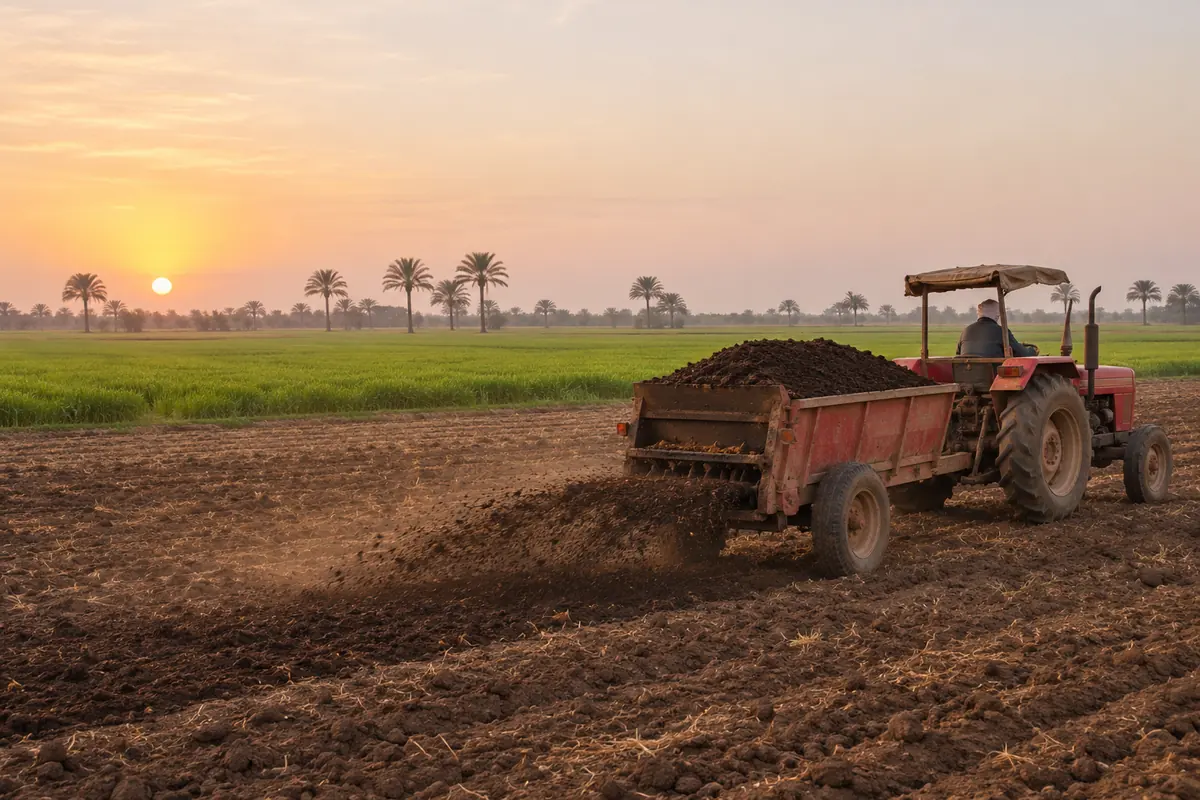
Egyptian extension articles put the wheat sowing window at 15 November to early December, and advise against sowing after the end of November. For land preparation they quote about 20 m³ per feddan of well-decomposed farmyard manure or compost, mixed into the soil before the last plough. That is a quoted range, not a rule: it shifts with soil, water and variety, so let a soil test decide.
Today is 13 November, and the wheat window opens in two days. If your field is not prepared yet, you have roughly two weeks to get manure on site and worked in. That is enough time, provided the manure is fit for the job. The usual mistake is putting raw, half-rotted manure into the soil a few days before sowing, and the extension sources warn against exactly that.
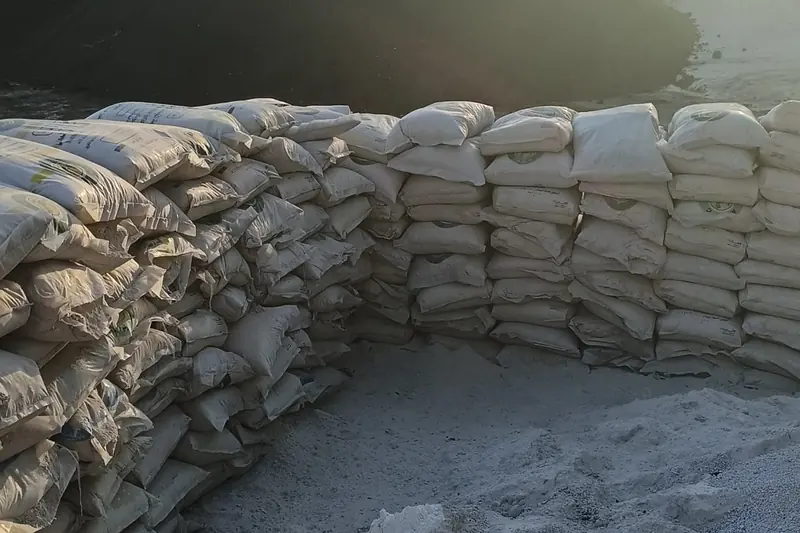
If you are sourcing manure for land preparation, we sell local livestock manure at 275 EGP per ton and raw livestock manure at 375 EGP per ton, both in our livestock manure range. Prices are per ton, confirmed by sales at order time. For a plant-based option there is also our compost and blends range. The rest of this post explains how to choose between them. (A feddan is the Egyptian land unit of about 4,200 m².)
The sowing window and where manure fits
The extension articles we reviewed on 13 November 2026, including Elaard and El Balad, agree on the window: 15 November to early December. What that means in practice:
- Manure goes in before sowing, during land preparation, not afterwards.
- Every day past the end of November narrows your margin on variety choice and irrigation timing.
- Order early. Delivery, spreading and mixing take days, not hours.
What the extension sources quote
These are ranges quoted by Egyptian extension sources, not our recommendation. Adjust them by a soil test and your agronomist’s advice.
| Item | What the sources say |
|---|---|
| Type | Well-decomposed farmyard manure or compost |
| Quantity | About 20 m³ per feddan (some say 10 to 20) |
| Timing | Mixed in during land preparation, before sowing |
| New sandy lands | Rate can be raised by 20 to 50% |
| Effect on mineral fertilizer | Mineral nitrogen can be cut by about 15 kg N per feddan |
The same articles stress that rates vary with soil type, irrigation water quality, variety and sowing date. Treat any single number as a starting point for a conversation with your agronomist.
Cubic metres versus tons
Extension articles speak in cubic metres. We sell by the ton. How many tons make a cubic metre depends on moisture and how packed the pile is, so there is no fixed figure we can honestly give you. Work out the volume you need first, then ask our sales team how many tons that volume is for the batch currently in the yard. Our Arabic guide on ton versus metre covers the arithmetic.
Manure quality matters more than quantity
The extension articles set clear conditions for the manure that goes into a wheat field. It should be:
- Old and well decomposed, not fresh.
- Free of weed seeds.
- Free of nematodes, insect larvae and pathogens.
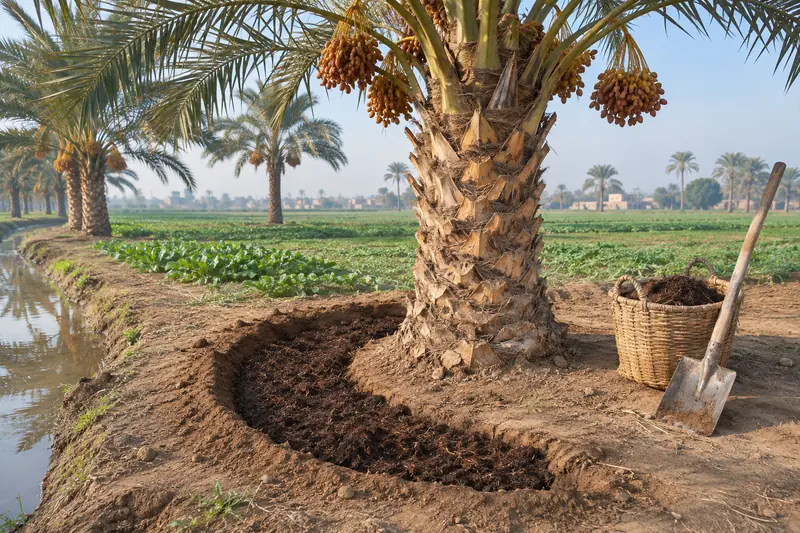
You can check the first condition yourself. Dig into the pile. If it is hot or smells sharp enough to sting the nose, it is not ready. Good manure is dark, crumbly and earthy. For a longer checklist, read 7 checks for organic fertilizer quality, and for compost in particular, how to tell when compost is mature.
You cannot see the second and third conditions. That is why you should ask any supplier where the manure came from and how long it was stored, and why you should look at the batch before it is loaded. Ask us about the batch available at the time you order.
Livestock manure or poultry manure for wheat?
The extension articles talk about farmyard manure, meaning cattle, sheep and horse manure. Poultry manure is a different animal. According to the sources we reviewed, it is far richer in nitrogen than cattle or horse manure, and it burns roots and seedlings if applied fresh. A study reported by Al-Watan found that in wheat trials in Dakahlia, compost enriched with poultry manure did better than EM-inoculated compost and than farmyard manure. That was one specific preparation, and we are not claiming any of our products gives the same result.
If you are thinking about poultry manure, read does chicken manure burn plants first, and take our sales team’s advice on which type suits your soil and sowing date.
Compost or farmyard manure?
Extension and agronomy articles, including the one in Al-Watan, note that farmyard manure improves the structure of clay soil, but its makeup varies with the animal, its age and how it was stored, so no two heaps are identical. Compost is decomposed plant residue and helps sandy soil hold water, but immature compost has a high carbon-to-nitrogen ratio and can hold back growth instead of helping it.
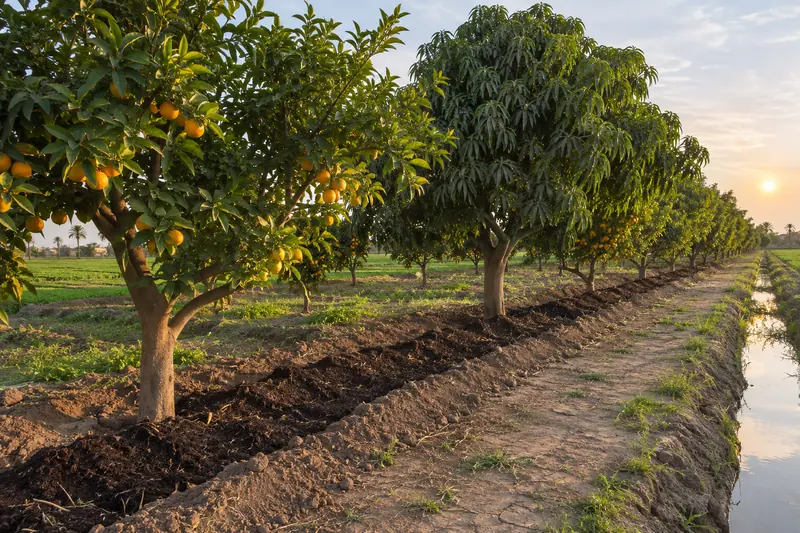
For clay-type fields, decomposed farmyard manure is what the extension sources describe for wheat. For sandy or newly reclaimed land, mature compost is a reasonable choice, and the sources raise the rate there. We list plant and animal compost at 650 EGP per ton, confirmed by sales at order time.
New sandy land: watch the salts
Articles on improving sandy soil say organic fertilizers can carry a high salt load, which deserves attention near the coast. If your land is on the desert fringe or close to the sea, ask for a salinity reading with your soil test before raising the rate. The same sources favour drip irrigation and splitting fertilization into several doses on sand. We cover this in improving sandy and reclaimed soil.
Mixing with mineral fertilizer
The sources do not say manure replaces mineral fertilizer. They say it lets you reduce mineral nitrogen by about 15 kg N per feddan. Manure is a partner to your urea or nitrate programme, not a substitute for it.
The price backdrop explains why farmers are watching this. Ahram Gate reported on 11 November 2026 that free-market urea was selling at about 24,534 EGP per ton. That is the market figure for that day. We make no comparison between it and our prices, because the right comparison is the nutrient your field actually needs. For more on that question, see organic vs chemical fertilizer.
Common mistakes before sowing wheat
- Spreading manure on the surface after sowing, when the sources describe mixing it in during land preparation.
- Judging manure by smell alone. Smell tells you about maturity, not weed seeds.
- Leaving manure in sun and rain for weeks, which changes its makeup.
- Copying a neighbour’s rate without looking at your own soil and water.
- Ordering at the last minute, so the manure arrives as the window closes.
A short two-week plan
- Get a soil test if you do not have a recent one.
- Work out the volume in cubic metres from the range your agronomist accepts.
- Order and book delivery so manure arrives with time to spread before the last plough.
- Inspect the batch on arrival: smell, heat, moisture, weed seeds.
- Spread and mix it in during land preparation, then level.
- Set your mineral fertilizer with your agronomist, counting the manure you added.
FAQ
How many cubic metres of farmyard manure per feddan of wheat?
Egyptian extension sources quote about 20 m³ per feddan, and some say 10 to 20. That is a quoted range, not our recommendation, and it changes with your soil, water, variety and sowing date. Use a soil test and your agronomist.
Can I use poultry manure on wheat before planting?
Poultry manure is much stronger than farmyard manure, and fresh poultry manure burns roots and seedlings. If you use it, use it well aged, mix it thoroughly into the soil, and apply less of it than you would of livestock manure. Take technical advice first.
If I add manure, can I skip mineral fertilizer?
The sources describe cutting mineral nitrogen by about 15 kg N per feddan, not removing it. Agree the rate with your agronomist, based on your soil test.
Order manure for wheat preparation
Choose your quantity in tons and your governorate on the order form and our sales team will confirm price, available quantity and delivery date. We deliver to every governorate in Egypt from Itay El Baroud in Beheira and have been serving farmers since 1984. You can also message us on WhatsApp at 01012205022, or contact us to ask about the current batch before you order. To see everything we sell, open the shop.