Organic and Bio-Fertilizers in 2026: What the Numbers Say
Egypt’s Agricultural Economics Institute (September 2026) estimated that bio-fertilizers could cut mineral nitrogen use by 20 to 30 percent, about 24 percent on average. Global estimates for the organic fertilizer market in 2026 run from roughly 8 to 12 billion USD depending on who counts. What all the sources share: growers use organic inputs to complement mineral fertilizer, not to replace it.
What the Agricultural Economics Institute reported
Banker News carried the Institute’s September 2026 report. The main points:
- Bio-fertilizers could reduce mineral nitrogen use by 20 to 30 percent, about 24 percent on average.
- They could cut the carbon footprint of fertilization by up to 30 percent.
- The report suggests starting with strawberries, onions and garlic, then potatoes, then grape and citrus programmes.
This followed an April 2026 announcement from the Ministry of Agriculture that it would expand bio-fertilizers, reported by Ahram Business, while the ministry was also denying any official rise in fertilizer prices.
One distinction before going further. Bio-fertilizers are a different category from farmyard manure, poultry manure and compost. What we list on this site is organic fertilizer and agricultural gypsum, and we do not attach the 20 to 30 percent figure, or any other number from the report, to our products.
Why everyone is talking about alternatives now
Prices explain it. In April 2026 the free-market price of nitrogen fertilizer rose to about 28,000 EGP per ton, from about 22,000 in February and March, which Al-Araby Al-Jadeed linked to gas costs. On 11 November 2026, Ahram Gate put free-market urea at about 24,534 EGP per ton. Anyone buying at those prices looks for ways to buy less of it.
That is where organic fertilizer enters. For a direct cost comparison, read organic vs chemical fertilizer in 2026, which works the cost out per unit of nutrient rather than per bag.
How big is the organic fertilizer market? The estimates disagree
Four research firms published global figures for 2026, and they differ a lot:
| Firm | 2026 market size | Annual growth (CAGR) |
|---|---|---|
| Persistence Market Research | about 8.2 billion USD (15.0 billion by 2033) | 9.0% |
| Fortune Business Insights | 8.32 billion USD | 9.02% |
| Future Market Insights | 9.8 billion USD (17.9 billion by 2036) | 6.2% |
| Business Research Company | 11.98 billion USD | 8.3% |
The gap between the lowest and highest figures is over 3.5 billion USD, and the published summaries do not tell us what each firm counts as “organic fertilizer”. Read these numbers as a rising trend, not a precise figure, and do not plan your farm around any of them. What the four agree on is growth of roughly 6 to 9 percent a year.
The same reports say farmers account for about 65 percent of end-use demand in 2026, and that organic fertilizer typically costs 30 to 50 percent more than urea per unit of nutrient, which they name as a barrier to wider adoption.
What farmers actually do: a study from outside Egypt
A study in Applied Economics Education and Extension (November 2026), covered by Yahoo News, looked at South Dakota grain farmers. It found that fertilizer prices rose again in 2026 and that farmers treat alternatives as complements, not replacements. The most common combination was slow-release fertilizer plus organic, at 16 percent.
It is an American study with conditions unlike the Nile Delta, so we take no numbers from it for your field. But the direction matches the Egyptian report: reduce a share, do not eliminate.
What this means for an Egyptian farmer
1. The numbers support “cut part”, not “drop chemical”
Nothing above says land can be fed with no mineral fertilizer. The Egyptian report talks about a 20 to 30 percent cut in nitrogen, and the American study about combinations. Start with a small plot or a single crop.
In practical terms: if you buy urea at the free-market price (about 24,534 EGP per ton on 11 November), every share you cut saves real money, but you must subtract the cost of the organic material, its transport and spreading. If the result is near zero in the first season, do not judge too early; the effect of organic matter builds over several seasons. If it is clearly negative, adjust the quantity or the type.
2. The first candidate crops are named
Strawberries, onions and garlic head the report’s list. If you grow any of them, see organic fertilizer for strawberries, onions and garlic.
3. Wheat shows how a cut works
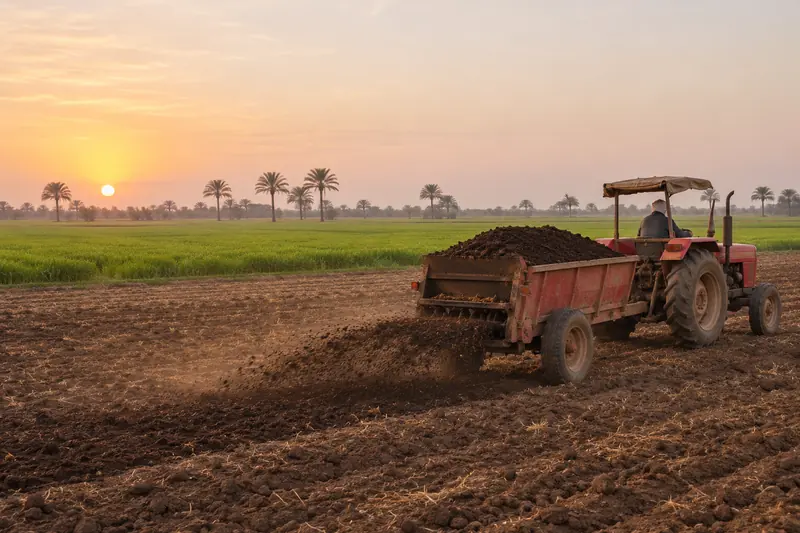
The wheat window is still open (sowing 15 November to early December). Egyptian extension articles (elaard.com among them) quote about 20 cubic metres per feddan of well-decomposed farmyard manure or compost during land preparation, which lets you reduce mineral nitrogen by about 15 kg N per feddan. These are ranges quoted by Egyptian extension sources, not our recommendation; adjust them by a soil test. See preparing wheat with organic manure.
4. Sandy land benefits first
Egyptian agricultural sources note that sandy soil loses mineral fertilizer with irrigation water and that combining organic and mineral fertilizer raises the plant’s use of what is applied. That makes it one of the clearest cases for mixing. See improving sandy and reclaimed soil.
5. Winter is organic feeding season for trees
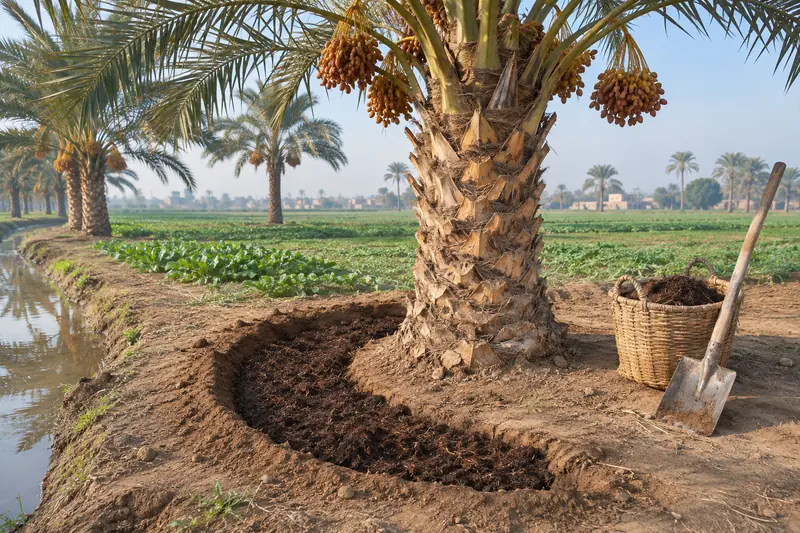
For citrus, mango and grapes, Egyptian sources (Al-Watan among them) say the December-January dormancy is the usual time for organic feeding, and that early application gives the material time to decompose. Rates vary widely with tree age and soil, and some sources are old, so we quote none here. The detail is in winter organic feeding for citrus, mango and grapes.
6. Quality matters more than the label
“Bio” or “organic” printed on a bag guarantees nothing. Ask about analysis, moisture and maturity, and go through the checks for judging organic fertilizer quality before you pay.
How to read any new fertilizer number
You will meet plenty of figures this season. Ask three questions before relying on one:
- Who said it? An institute report, or a product’s marketing? Is it dated and sourced?
- What is it about? Bio-fertilizers are not manure; a global market is not a local one; a named crop is not necessarily yours.
- Does it apply to my land? An average such as 24 percent hides many cases, and your field may sit above or below it. Only a soil test and a trial on a small plot can tell you.
A simple rule protects you: if someone promises a guaranteed yield or plant-health result from a single input, stop and ask for the source.
What the numbers do not say
- They do not say any specific product achieves the same reduction; the report is about bio-fertilizers.
- They do not promise higher yield. The figures we relied on contain no such promise, so we make none.
- They do not set a dose for your field. That depends on soil test, crop and irrigation water.
- Global market figures tell you nothing about the price of a ton in your area.
Organic fertilizer from us
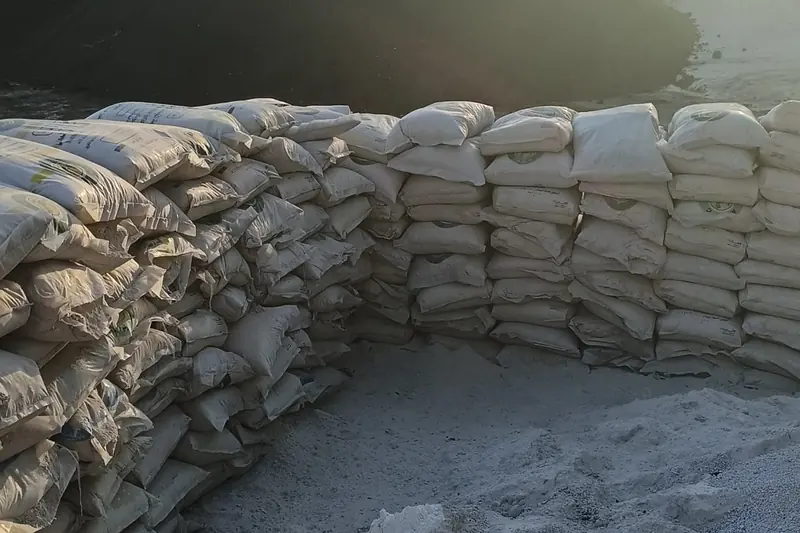
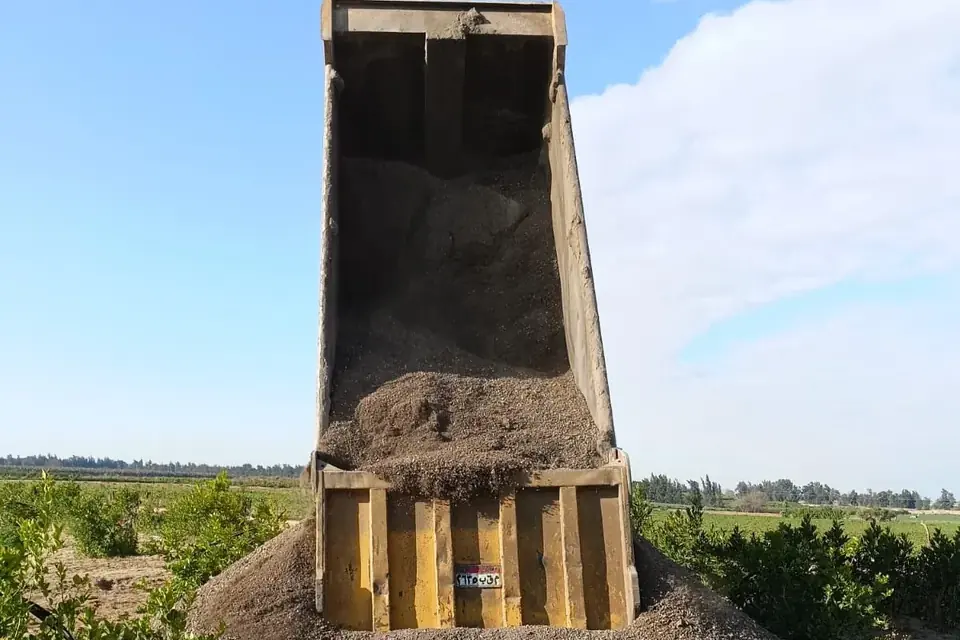
We sell by the ton. Local livestock manure is 275 EGP per ton, plant and animal compost 650, fresh belt poultry manure 750 and layer poultry manure 1,400. All prices are per ton, confirmed by sales at order time. Browse livestock manure and compost and blends to match your soil and crop.
FAQ
Are bio-fertilizers the same as organic fertilizer?
No. They are separate categories that often appear in the same conversation about alternatives to mineral fertilizer. What we sell is livestock manure, poultry manure, compost and blends, plus agricultural gypsum.
Can organic fertilizer cut urea by 20 to 30 percent?
That figure was given for bio-fertilizers, and we do not link it to organic manure. For wheat, Egyptian extension sources mention a reduction of about 15 kg N per feddan when organic material is added, to be adjusted by a soil test.
Where should I start this season?
With one plot. Add organic material at land preparation, trim the mineral dose by a small share, and record what happens. Then decide whether to expand.
Place your order
Choose the type, the quantity in tons and your governorate on the order form. It opens a WhatsApp message with a reference number, and our sales team confirms the price and delivery date. We deliver to all Egyptian governorates. Questions are welcome on WhatsApp at 01012205022, through the contact page, or browse the shop.