How to Fertilize Date Palms with Organic Manure (Timing and Method)
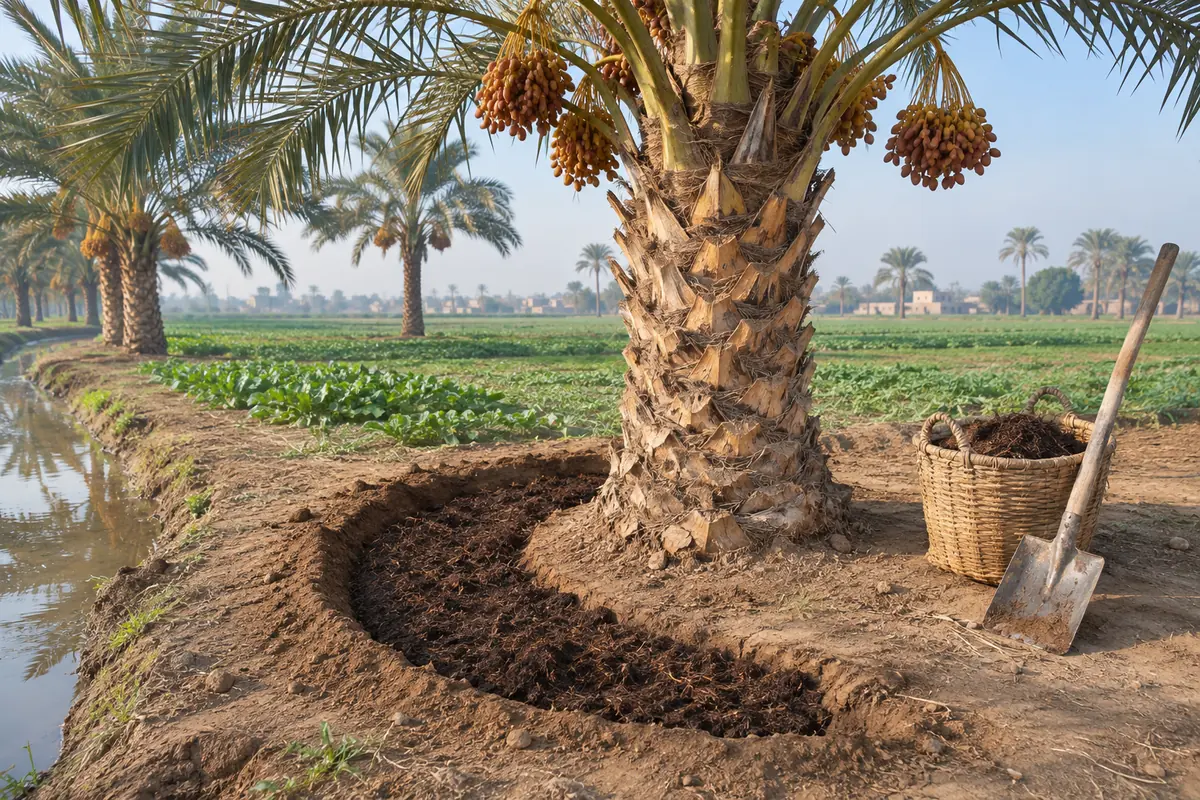
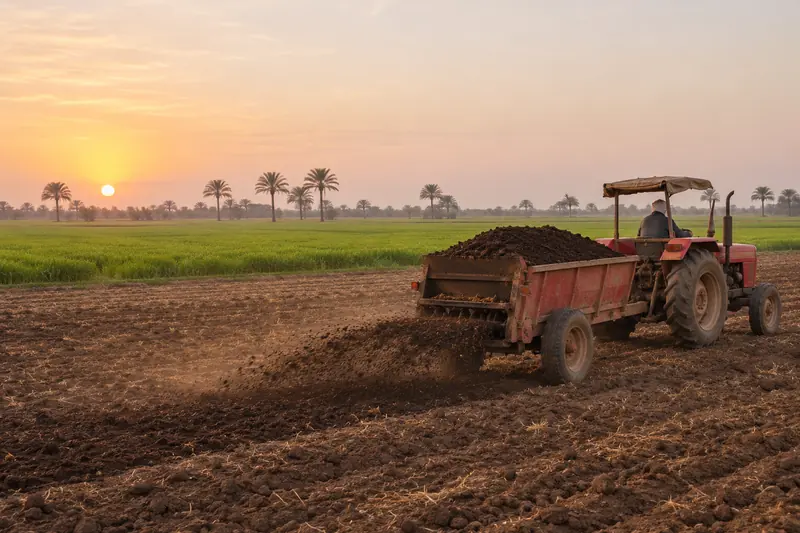
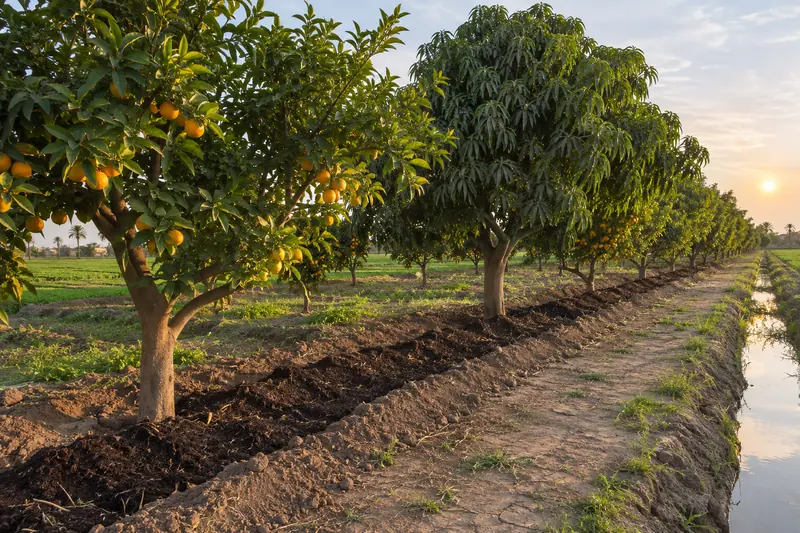
The usual window for feeding date palms with organic manure in Egypt is December to January, or November to December where the orchard is flood-irrigated. Dig a half-moon trench on one side of the palm, 70-100 cm from the trunk and about 40-50 cm deep and wide, add well-decomposed manure, backfill and water. These figures come from Egyptian farming sources and should be adjusted by a soil test.
Why winter?
Manure does not feed a palm the day you put it in the ground. It has to break down in moist soil before the roots can use it. That is why Egyptian farming sources, among them Hundzsoil Egypt and Agri2Day (both checked on 13 November 2026), place the yearly organic application in December and January, ahead of the new growth cycle. Where the orchard is flood-irrigated, some of them move it forward to November-December.
The same sources treat organic feeding as a yearly routine, not a one-off job.
One point up front: everything below that sounds like a rate or a ratio is quoted from those sources. It is not our own recommendation. Palm age, soil and irrigation change the numbers, so settle the final quantity with an agronomist and a soil test.
Which manure suits palms?
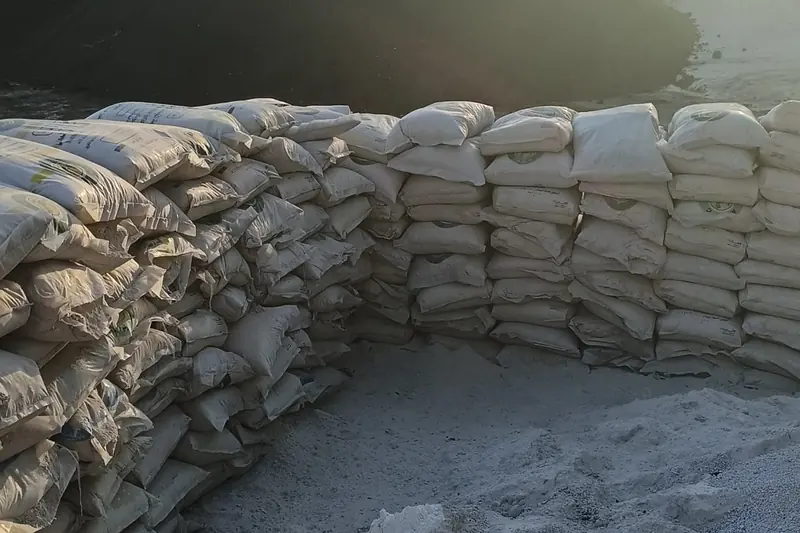
The Egyptian sources talk about decomposed farmyard manure, meaning cattle or sheep manure that has been stored and aged. At Al Omariya the options are priced per ton, and sales confirms the price at order time:
- Local livestock manure: 275 EGP per ton
- Raw livestock manure: 375 EGP per ton
- Plant and animal compost: 650 EGP per ton
- Al Omariya economy blend: 750 EGP per ton
More options are listed under livestock manure and compost and blends.
We do not publish lab figures or nutrient percentages for these products on this page. If you need information on a specific product, ask the sales team. Which one fits your palms depends on their age, your soil and your budget, and the team can talk it through with you on WhatsApp.
The trench method, step by step
1) Mark the trench
The sources describe a half-moon trench on one side of the palm, 70-100 cm out from the trunk. Keep the manure away from the trunk itself.
2) Dig to the right size
Roughly 40-50 cm wide and 40-50 cm deep is the figure quoted. Take care not to cut large roots when digging close to the palm.
3) Fill and backfill
With flood irrigation, the quoted amount is about 100 kg of manure per trench, which is about four baskets. You can mix it with some of the soil you dug out, then fill the trench back in.
4) Water straight away
Manure needs moisture to start breaking down and to move toward the roots. The sources say to irrigate right after applying.
How much manure per palm?
This is where the sources differ, and that is normal. Age, soil and irrigation all move the figure. Here is what they publish:
| Source | Quoted figure |
|---|---|
| Egyptian farming sites (Hundzsoil, Agri2Day, Mawdoo3) | about 100 kg of farmyard manure per trench under flood irrigation |
| Farming sites and forums | mature palm: 30-45 kg of farmyard manure per year |
| The same sources | poultry manure at about half the quantity of farmyard manure |
| Desert Research Center trial in Siwa (via ResearchGate) | 100 kg farmyard manure per palm improved nutrient uptake |
| Oasis review | more than 30 kg of compost per palm every 2-3 years |
The figures do not match because they describe different things: one trench under flood irrigation, a full year for a mature palm, and a compost routine spread over several years in oasis conditions. Do not add them together. Ask your agronomist which one is closest to your orchard.
A quick calculation for your plot
This is plain arithmetic on the quoted figures, not a recommendation. With 100 palms at 30-45 kg each, you need 3-4.5 tons. At 100 kg per palm, you need 10 tons. That gap is big, which is one more reason to fix the quantity with a soil test before you order.
For a rough budget, 3-4.5 tons of local livestock manure at 275 EGP per ton comes to about 825-1,237 EGP for the material alone, before transport and labor. Final prices are confirmed by sales at order time.
Poultry or farmyard manure?
The sources say poultry manure is richer in nitrogen, around 3-5% against 0.5-1% for cattle and horse manure, and for that reason they quote about half the quantity. Those percentages describe manure types in general, not our products.
The richer manure is also the one that can burn roots if it is fresh or overdone. If you are considering poultry, read Does chicken manure burn plants? first.
Mixing with superphosphate and sulphur
Some sources suggest mixing 0.5-1 kg of calcium superphosphate and 0.5-1 kg of wettable sulphur per palm with the manure. That is a range quoted by Egyptian sources, not our advice, and it must be adjusted by a soil test. If your soil is saline or alkaline, ask an agronomist before adding sulphur.
Do palms need manure alone?
Not necessarily. The Siwa trial published through ResearchGate combined mineral fertilizer (nitrogen, phosphorus, potassium) with sheep manure and recorded better leaves, bunches and sugars. We cite it only as an example that many programs combine the two. It is not a promise of results in your orchard. How you balance them is for your agronomist, based on soil tests and palm age.
What to ask before you buy
Manure quality varies between suppliers. Egyptian extension articles written for other crops, such as wheat, say manure should be old and decomposed and free of weed seeds, nematodes, insect larvae and pathogens. The same standard is sensible for palms. In practice:
- Ask how long the manure has been aged, and check its color and smell. Decomposed manure is dark, crumbly and earthy.
- Check moisture. Soaking-wet manure means you pay for water by the ton.
- Ask for a sample or a photo of the pile before loading.
- Order by weight in tons, not by truck load, because truck sizes vary.
A simple yearly calendar
- November-December: flood-irrigated orchards, per the sources. Prepare the trenches and order early.
- December-January: the main window. Dig, fill, backfill and water.
- After applying: irrigate as usual. Do not feed a sick palm until it has been treated.
- Next year: repeat. The exception is the oasis compost routine, which works on a 2-3 year cycle.
We suggest keeping a record of each application, date and quantity per plot. After two or three seasons you will know which quantity actually suited your land.
Mistakes to avoid
Over-fertilizing. The sources warn against it. More is not better, and it costs money.
Feeding a sick palm. The sources say sick palms must be treated first. Manure does not cure weevil or rot, and a struggling palm cannot make use of it. Find the problem, then feed.
Skipping the watering. Dry manure in a dry trench breaks down slowly. Water after applying.
Missing the window. Winter timing has a reason. If you can feed now, do not push it to summer.
Storing it badly. If you buy ahead, keep the manure out of rain and standing water.
Order manure for your palms
When you know your quantity, choose the product, tons and governorate on the order page. That opens a WhatsApp message with a reference number, and the sales team confirms price, availability and delivery date. We deliver to all Egyptian governorates and have worked with organic fertilizer since 1984. You can also browse the shop first, or contact us on WhatsApp and ask which product suits your palms.
To compare costs with mineral fertilizer after this year’s price rises, see Organic vs chemical fertilizer in 2026.
FAQ
When should I fertilize date palms with organic manure?
Egyptian farming sources point to December and January each year, or November and December under flood irrigation. The aim is for the manure to break down before new growth starts.
How much farmyard manure does one palm need?
The quoted figures are 30-45 kg per mature palm per year, and about 100 kg per trench under flood irrigation. Both vary with age and soil, so fix the quantity with a soil test.
Should I fertilize a sick palm?
Not first. The sources say a sick palm is treated first and fed after it recovers.