Winter Organic Feeding for Citrus, Mango and Grapes
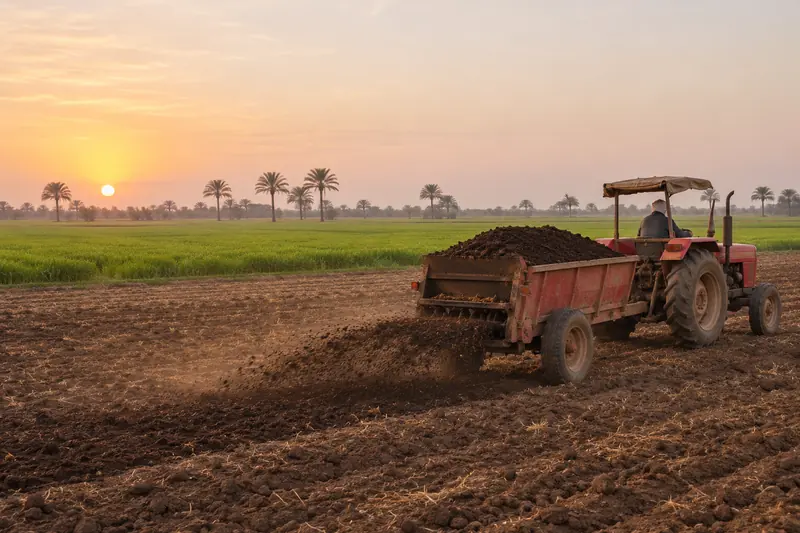
Winter, roughly December to January, is when Egyptian sources place the organic feeding of citrus, mango and grapes, because the trees are dormant and the manure needs time to break down before spring growth. Put decomposed farmyard manure or compost into trenches early. Published rates vary by tree age and soil, so set yours with a soil test.
Why feed an orchard in winter?
Citrus, mango and vines are long-lived trees. Egyptian farming sources, including Al-Watan (checked on 13 November 2026) and several agriculture sites, treat the December-January dormancy as the time for the yearly organic application.
The reason is practical. Manure does not work the day you spread it. It takes weeks to decompose and mix into the soil. Applied early, it is ready when growth restarts. Applied late, you lose that advantage.
Every figure in this article is quoted from the named source and is not our own recommendation. Some of those sources are old, and rates vary from one orchard to another, so check them with your agronomist.
Which of our products fit an orchard?
The sources talk about farmyard manure and compost. We sell by the ton, and sales confirms prices at order time:
- Local livestock manure: 275 EGP per ton
- Plant and animal compost: 650 EGP per ton
- Al Omariya economy blend: 750 EGP per ton
- Al Omariya regular blend: 950 EGP per ton
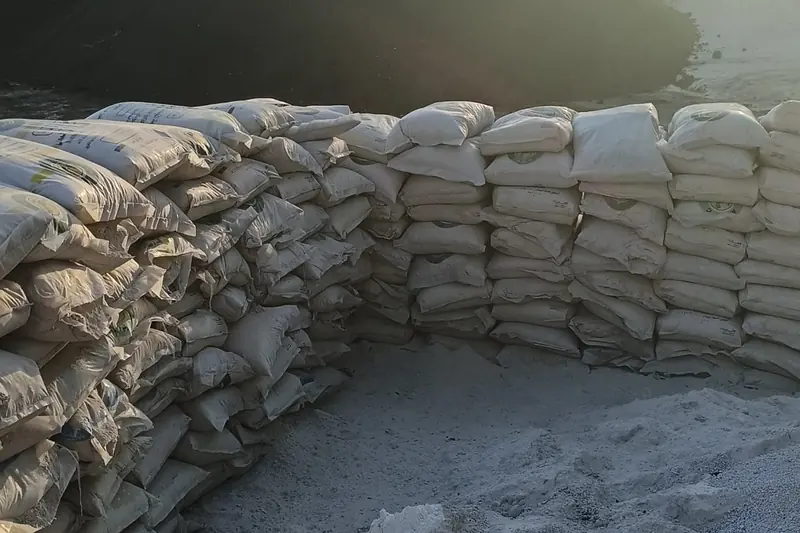
You will find more under livestock manure and compost and blends. We do not publish lab results or nutrient percentages for these products here. For information on a specific product, ask the sales team on WhatsApp.
Which one suits your trees depends on price per ton, your budget and your soil. If you are weighing poultry manure too, read Does chicken manure burn plants? before deciding.
Mango: December to early January
The sources put farmyard manure or compost for mango between December and early January. For trees aged one to five years, the quoted figure is about 10-15 m³ of organic manure per feddan, together with 50-150 kg of superphosphate.
Watch the unit. These figures are cubic meters per feddan, while we sell by the ton, and the weight of a cubic meter changes with moisture and manure type. Convert only after checking with your agronomist.
Citrus: kilograms per tree
For citrus the sources give figures per tree:
- One source quotes 5-20 kg of organic manure per tree per year, depending on age.
- Another quotes 20-40 kg together with 1 kg of calcium superphosphate and 0.5 kg of agricultural sulphur per tree.
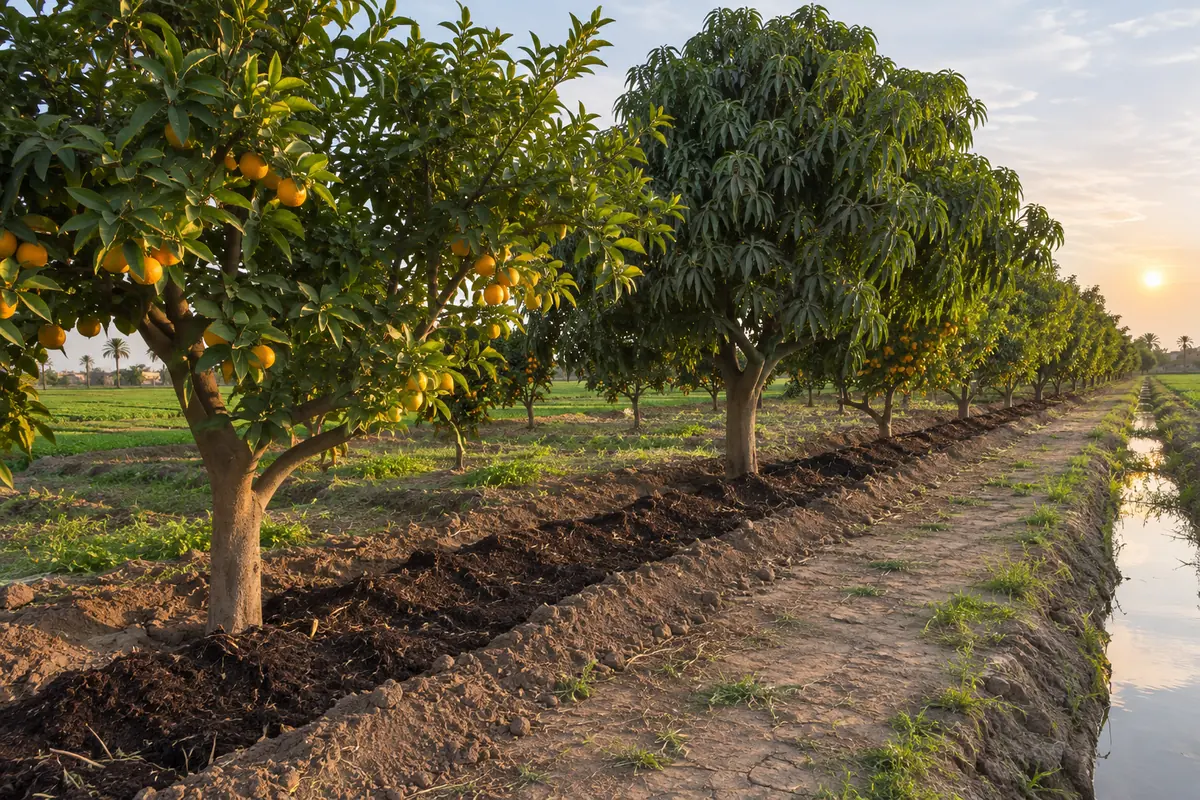
The manure goes into two trenches, one on each side of the tree, about 30-40 cm deep. The sources advise applying early so it decomposes.
The gap between the two figures (5 versus 40 kg) is large. The first source ties the figure to age, the second gives one figure with mineral additions, so do not assume either applies to your trees. Ask which one matches your trees’ age.
The every-two-years option
One source says organic manure for citrus can be applied every two years when its cost is high, as long as the phosphate and sulphur continue every year. That is a quoted option, not our recommendation. Confirm it with a soil test.
Grapes: December to February
For vines the sources give December to February. Clear the weeds first, then apply farmyard manure or compost at about 20-30 kg per vine together with phosphorus.
Clearing first matters because poorly decomposed manure can bring weed seeds with it. Ask the supplier how long the manure has been aged before you buy.
If you grow more than one crop, order the work by timing. Start with the narrowest window, mango (December to early January), then citrus, and leave grapes, whose window runs to February, for last. That spreads labor and deliveries over several weeks.
The numbers side by side
| Crop | Timing | Quoted figure | Source note |
|---|---|---|---|
| Mango (1-5 years) | December to early January | 10-15 m³/feddan plus 50-150 kg superphosphate | varies by age and soil |
| Citrus | early winter | 5-20 kg/tree, or 20-40 kg with 1 kg superphosphate and 0.5 kg sulphur | two trenches; every 2 years possible |
| Grapes | December to February | 20-30 kg/vine with phosphorus | after weeding |
These are ranges quoted by Egyptian extension sources and should be adjusted by a soil test. Some come from older material.
Working out an order
Say you have 200 citrus trees. At the first source’s 5-20 kg per tree, the total is 1-4 tons. At 20-40 kg per tree it is 4-8 tons. That is arithmetic on quoted figures, not a recommendation.
At 275 EGP per ton for local livestock manure, the material alone comes to roughly 275-2,200 EGP, before transport and labor. The final price is confirmed by sales at order time. Remember to budget for digging, labor and transport as well, since manure is not the only cost line.
Spreading the cost over two years
Suppose that, after talking to your agronomist, you choose to apply organic manure to citrus every second year. On paper it is simple: you buy the organic input once every two years instead of every year, and the phosphate and sulphur continue annually as the source describes. You protect your budget without leaving the orchard unfed with phosphate.
It does not suit every orchard. The sources describe sandy soil as low in organic matter and poor at holding mineral fertilizer, so your agronomist may prefer a yearly organic application there. If that is your case, also read Improving sandy and reclaimed desert soil with compost and gypsum. This is a decision for you and your agronomist after a soil test, not a general rule.
Test the soil first
All the figures above are ranges. A soil test turns a range into a quantity. Ask the lab or local extension office about salinity, current organic matter and acidity. Organic fertilizers can carry salts, so watch salinity, especially near the coast. Then decide on the quantity and type, and keep a log of each application, date and amount per plot. After two or three seasons you will have your own record instead of relying on published figures.
Practical tips
- Order early. Do not wait until December to contact the supplier. Fixing quantity and delivery takes time.
- Ask about maturity. Poorly decomposed manure can heat up in the soil and hurt roots. The sources warn about this mainly for poultry manure.
- Water after applying so decomposition starts.
- Store it out of the rain if you buy ahead of time.
- Treat blocks separately. A figure suited to young trees does not suit trees ten years old.
Palms, and the wider picture
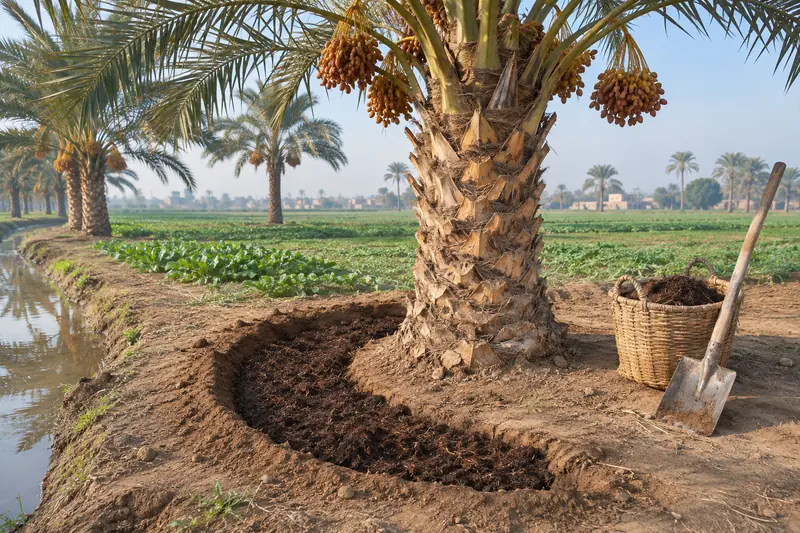
If you also have date palms, they have a similar winter window and their own method: How to fertilize date palms with organic manure. To compare costs with mineral fertilizer after this year’s price rises, see Organic vs chemical fertilizer in 2026.
On policy: an Agricultural Economics Institute report from September 2026, as reported by Banker News, said bio-fertilizers could cut mineral nitrogen use by 20-30%, and that programs for grapes and citrus come after strawberries, onions, garlic and potatoes in the order of rollout. We mention it for context only. It is not a promise of results in your orchard.
Order manure for your orchard
Fix your quantity in tons, then choose the product, tons and governorate on the order page. That opens a WhatsApp message with a reference number, and the sales team confirms price, availability and delivery date. We deliver to all Egyptian governorates and have worked with organic fertilizer since 1984. You can also look through the shop first, or contact us on WhatsApp and ask which product suits your orchard.
FAQ
When should I fertilize citrus with organic manure?
Egyptian sources point to winter, roughly December to January, and to applying early so the manure decomposes before growth starts.
How much organic manure does a citrus tree need?
The quoted figures are 5-20 kg per tree per year depending on age, and in another source 20-40 kg with superphosphate and sulphur. These vary with age and soil, so set the quantity with a soil test.
Can I apply organic manure every two years to save cost?
One source says so for citrus, provided the phosphate and sulphur continue every year. Check it with your agronomist before adopting it.