Buying Organic Fertilizer in Bulk from Egypt: A Buyer’s Checklist
Before you buy organic fertilizer from Egypt in bulk, ask every supplier for eight things: a recent lab analysis of the exact batch, a phytosanitary certificate, organic certification if your market requires it, confirmation that your country allows manure-based products, the Incoterm and loading port, the minimum order, a sample, and clear payment terms.
Egypt has a lot of organic fertilizer on offer, from compost to poultry manure to pelleted blends, and listings on trade portals make it look simple. In practice, a container of manure-based product crosses customs, plant-health and sometimes veterinary rules at the other end, and a missing paper can hold it at the port. This checklist is for importers, distributors and large farms who want to ask the right questions before signing anything.
A note on who is writing. Al Omariya is a producer and supplier in Itay El Baroud, Beheira, on the Cairo-Alexandria Agricultural Road, operating since 1984. We sell poultry manure, livestock manure and compost and blends, priced per ton in Egyptian pounds for the Egyptian market. For export documents, we do not list any here. Ask us which documents we can provide for your shipment, and we will tell you what we hold and what we do not.
What the trade listings show
A look at Egyptian compost listings on B2B portals such as TradeKey, Go4WorldBusiness, Kompass and Flagma (checked 13 November 2026) shows a few patterns:
- FOB prices for compost listed at roughly 400 to 500 USD per ton, with some vermicompost listings at 500 to 1,000 USD.
- Minimum orders from about 10 to 28 tons.
- Capacity claims such as 20,000 tons a year.
- At least one Egyptian buyer asking for 25,000 metric tons a month of 4:3:3 NPK organic fertilizer.
Treat these as unverified and negotiable. A listing is an advertisement, not a quote. Prices depend on product, packing, volume, season and Incoterm, and we have not verified any of these listings. We do not publish export prices in this article. The checklist below helps you judge any offer, including ours.
The eight-point buyer’s checklist
1) Lab analysis of the exact batch
Ask for a lab report that names the laboratory, the date and the batch or heap the sample came from. A useful report covers nutrient content (NPK), organic matter, moisture and pathogens, and many buyers add salinity and pH. Avoid suppliers who quote figures from memory or reuse a years-old report for every shipment. Ask whether the sample was taken from the lot you will receive.
2) Phytosanitary certificate
Most importing countries ask for a phytosanitary certificate from the exporting country’s plant protection authority. Ask the supplier who issues it, how long it takes and whether it is included in the price or charged separately. Check with your own plant-health authority what exactly it wants to see on the certificate.
3) Organic certification, if your market needs it
If you will resell the product into an organic farming scheme, or your country requires certified inputs, ask for the certification in writing and check what exactly it covers: the product, the site, the validity period and the certifying body. A product can be natural and still not be certified. If a supplier cannot show certification, believe that answer and plan accordingly.
4) Is your country allowed to import it?
Poultry and livestock manure products are treated as animal by-products in many jurisdictions, with rules on heat treatment, packaging, import permits and sometimes outright bans from certain origins. Confirm with your veterinary or agriculture authority, in writing, before you place an order, whether the specific product (raw manure, composted manure, pelleted manure) is permitted and what documents must come with it. The rules of your country decide this, not the supplier.
5) Incoterm and port
Agree on the Incoterm early: FOB, CFR, CIF or another term. Ask which Egyptian port the cargo would leave from. The ones that appear most in listings are Alexandria, Damietta and Abu Qir. Ask who books the container, who pays for inland trucking to the port, and who handles export clearance. The same ton can have a very different landed cost depending on these answers.
6) Minimum order and packing
Ask what the minimum order is and in what unit: tons, containers or trucks. Ask about packing too. Options include loose bulk, big bags and small bags, and each affects container loading and handling at your end. A supplier quoting 10 tons as a minimum and one quoting 28 tons are not offering the same deal.
7) Samples
Request a sample before the first order, and make sure it comes from the same heap or production lot as your shipment. Test it yourself or send it to your own lab. Our companion post on how to tell compost is mature explains simple checks for smell, texture, temperature and germination you can run on a sample. For poultry-based products, does chicken manure burn plants? explains why fresh and composted material behave so differently in the field.
8) Payment terms
Clarify the deposit, the balance and when each is due. Common structures include an advance with the balance against documents, or a letter of credit for larger orders. Ask what happens if the shipment arrives different from the agreed sample or specification, and whether you can inspect or have an independent inspection company check the cargo at loading. Written terms on rejection and replacement protect both sides.
Red flags to watch for
- A price with no product description, or a product name that changes between messages.
- A lab report with no laboratory name, no date or no batch.
- Refusal to provide a sample before a large order.
- Pressure to pay the full amount before any document or inspection.
- Claims such as “approved everywhere” without naming a country, an authority or a certificate.
- A contact who disappears the moment you ask about phytosanitary papers.
What we can tell you now
For the Egyptian market, our prices are listed per ton in Egyptian pounds and confirmed by sales at order time. For example, plant and animal compost is 650 EGP per ton and broiler poultry litter is 900 EGP per ton. These are domestic prices and not export offers.
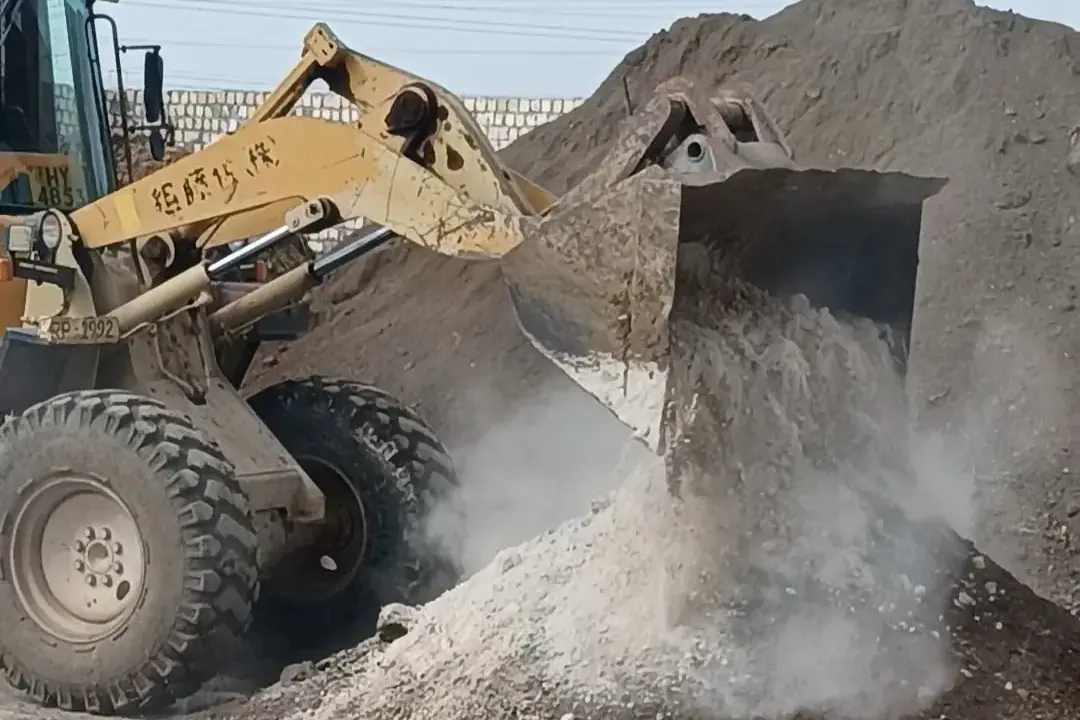
For export, we make no claim here about certificates, laboratory results or licences. The honest route is to ask: which documents can you provide for this product and this shipment? We will answer in writing, tell you what we hold and what we would need to arrange, and quote according to your destination, packing and Incoterm. You can also see our yard before you decide, and the loading in the photo at the top of this page is from our yard in Itay El Baroud.
FAQ
Are the FOB prices on trade portals reliable?
Not on their own. They are advertisements that vary widely, and nothing in a listing proves a supplier can deliver that quality at that price. Treat them as a starting point and confirm in writing with the product, packing and Incoterm named.
Do I always need organic certification?
No. It depends on your destination and on what you plan to do with the product. If your market or your customers require certified inputs, ask for it up front. If they do not, a lab analysis and the right plant-health and import papers may be what matters.
Can I get a sample before ordering?
Ask any supplier for one, including us. Make sure the sample is from the same lot as your shipment, and compare the delivered cargo against it.
Ask us
If you are an importer or a large buyer, write to us on WhatsApp at +20 101 220 5022 or through the contact page and tell us your product, quantity, destination and preferred port. Ask us which documents we can provide, and we will reply with what is possible. For local orders inside Egypt, use the order page or browse the shop.