How to Tell Compost Is Mature: Signs to Check Before You Buy
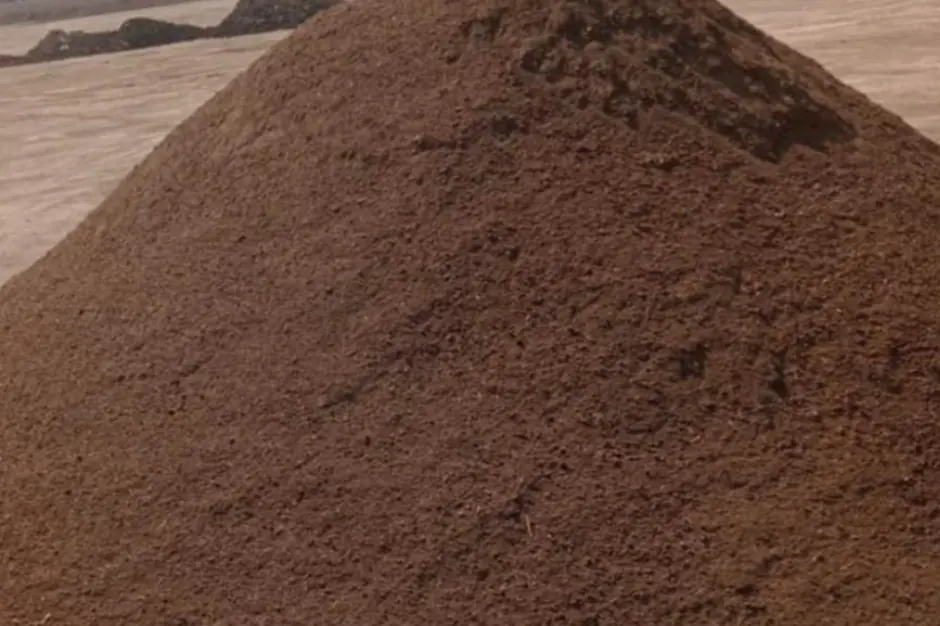
Mature compost is dark brown to black, crumbly, and smells like damp earth, not ammonia or rot. You can no longer pick out the original straw or leaves, and the heap has cooled to roughly air temperature. A quick germination test with radish or barley seeds in a sample confirms it before you spread a single ton.
A heap can look right and still not be ready. Many buyers find out two weeks after spreading, when seedlings turn yellow and stall. The cause is usually compost that was still breaking down. This guide walks through the signs you can check yourself, a germination test that takes under a week, the curing times quoted in published sources, and how to store compost once it is on your farm.
We sell plant and animal compost in the compost and blends range from our yard in Itay El Baroud, Beheira. The checks below work on any compost, ours or anyone else’s.
What “mature” actually means
Compost is organic waste, plant and sometimes animal, broken down by microbes into a soil-like material. While it breaks down, the heap heats up and the material keeps changing. Mature compost is the stage after that active phase has settled. It no longer heats up, no longer locks up nitrogen and no longer gives off sharp gases.
There is no fixed number of days. Maturity depends on the feedstock, how often the heap was turned, its moisture and the weather. So judge by signs, not by the calendar alone.
Six signs to check by hand
1) Colour
Look for an even dark brown to black throughout. Pale or yellow patches inside the heap mean material that has not broken down. The outside dries and changes in the sun, so dig in and look at the middle.
2) Smell
This is the fastest test. Take a handful from deep in the heap and smell it. Mature compost smells earthy. Published guides describe a sharp smell as a sign of an unfinished heap. Ammonia, rotten eggs or a sour, alcohol-like note all mean decomposition is still going on. Ammonia in particular means nitrogen is still being released fast, which damages young roots.
3) Texture
Squeeze a handful. Good compost is crumbly and falls apart in your fingers. If water drips out it is too wet; if it turns to fine dust it has dried out. A texture like slightly damp garden soil that holds together briefly and then crumbles is what you want.
4) Temperature
An active heap is hot in the centre and may steam on a cold morning. Mature compost has cooled to about air temperature. Push your arm or a metal rod deep in and check after a few minutes. If it still feels warm, break-down is continuing and it should not go near roots.
5) No recognisable feedstock
In finished compost you cannot pick out straw, corn leaves or vegetable scraps. A few woody fragments or eggshell bits are normal, but most of the mass should look uniform. If straw still keeps its shape and length, the heap needs more time.
6) A germination test
This is the final check, and it also catches salts and ammonia you cannot see.
- Take samples from several spots, from deep inside the heap, not the surface.
- Fill two or three pots with the compost and one pot with ordinary garden soil as a control.
- Sow ten radish, barley or clover seeds in each pot. All sprout quickly.
- Water them equally and wait four to seven days.
- Compare. If the compost pots sprout about as well as the soil and the leaves look healthy, it passes. Slow sprouting, yellow leaves or weak roots mean it is not ready.
It is a kitchen-table test, not a lab analysis. It also exposes weed seeds: many weeds in the pots suggest the heap never got hot enough.
Why immature compost hurts crops
An article in Egypt’s Al-Watan newspaper (Al-Watan, news/details/1471634) describes compost as decomposed plant residue that helps sandy soil hold water, but warns that a high carbon-to-nitrogen ratio can harm plant growth when the compost is immature.
The mechanism is simple. Soil microbes need nitrogen to break down carbon-rich, woody material. If you spread something that has not finished decomposing, those microbes take nitrogen from around your crop’s roots to finish the job. The plant then shows deficiency: yellow leaves and slow growth. If the material is still hot, it can also scorch young roots. That is why immature compost does not save money. It can cost you a season.
Egyptian extension articles on wheat make a related point: organic manure should be well decomposed and free of weed seeds, nematodes, insect larvae and pathogens (for example Al Balad’s extension piece).
How long does compost take to finish?
Times depend on the method. These figures come from published guides on composting chicken manure, not from our products:
| Method | Time quoted in sources |
|---|---|
| Hot composting with turning | about 6 to 10 weeks; typically 60 to 90 days |
| Hot composting plus curing | roughly 3 to 6 months |
| Cold composting (no turning) | 6 to 12 months |
For reference, rules for certified organic production in the United States (USDA) require a pile to hold 131 to 170 degrees Fahrenheit (55 to 77 degrees Celsius) for three days in an enclosed, aerated system, or for 15 days with at least five turnings in an open windrow. Raw manure that has only been aged, not hot-composted, should be applied at least 120 days before harvest on crops whose edible part touches the soil, and 90 days for others. See, for instance, the composting guidance at Gardening Know How (accessed November 2026).
These numbers come from other climates and feedstocks, so treat them as a rough guide. The better question to put to a seller is: how long since the heap was last turned, and did it go through a hot phase?
A buyer’s checklist at the yard
When the truck arrives, or when you visit the seller:
- Open the heap and sample from half a metre down.
- Smell it. Refuse ammonia or rot.
- Feel the temperature. Strong warmth means active decomposition.
- Check the feedstock. Is straw or leaf still visible?
- Ask what it was made from, how often it was turned and when.
- Take a sample home for the germination test before you spread the whole order.
For a broader checklist that applies to any organic fertilizer, see how to judge organic fertilizer before buying. If poultry manure is part of your mix, read does chicken manure burn plants? first.
Storing compost after delivery
Good compost can be spoiled by poor storage. Left soaked by rain it turns anaerobic and sour. Left in full sun it dries to dust and loses much of its value.
- Put it on slightly raised ground where water does not collect.
- Cover it with plastic sheeting or a tarp that keeps rain off but lets the sides breathe.
- Keep it lightly moist; do not let it dry out completely.
- Use it within a reasonable time instead of leaving it uncovered for months.
Compost on sandy and reclaimed land
Sandy soils gain the most from organic matter because it helps them hold water and nutrients. The ICARDA report Resource Management in the New Lands of Egypt states that many of Egypt’s new lands are sandy or loamy sand and that manure at 15 to 20 cubic metres or compost with 50 to 58 percent organic matter gave adequate planting conditions. Those are research figures, not a claim about any product we sell. See our post on improving sandy and reclaimed soil with compost and gypsum for more.
We do not set doses ourselves. The right rate depends on crop, soil and a soil test, and extension sources differ. Ask your local agronomist, and if you need help estimating tons for your area, message us.
Our compost
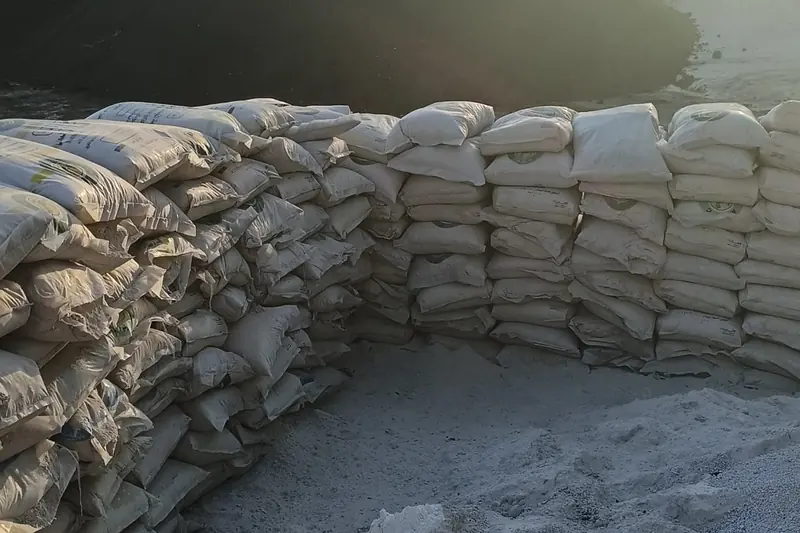
Plant and animal compost is listed at 650 EGP per ton, confirmed by sales at order time. We deliver to every governorate in Egypt from Itay El Baroud on the Cairo-Alexandria Agricultural Road. If you want to look at the heap before loading, ask the sales team. Other types are in the shop.
FAQ
Can immature compost harm crops?
Yes. Material that has not finished decomposing can pull nitrogen from around roots, or be hot enough to damage young roots. Check smell, temperature and texture, and run a small germination test before spreading.
How long should I wait after composting before using it?
Published sources give anything from a few weeks to several months depending on the method, with no single answer. Rely on the signs: colour, smell, texture and a cool heap, then confirm with the germination test.
Can I keep compost until next season?
Yes, for a reasonable time, if it is covered against rain and kept from drying out completely. Check it with the same signs before you use it.
Ready to order?
Choose the product and quantity in tons on the order page and your request reaches us on WhatsApp with a reference number. Or contact us directly on WhatsApp at +20 101 220 5022 with any question about the compost before you order.