Organic Manure for Maize in Egypt: Rates, Timing and Poultry Manure Cautions
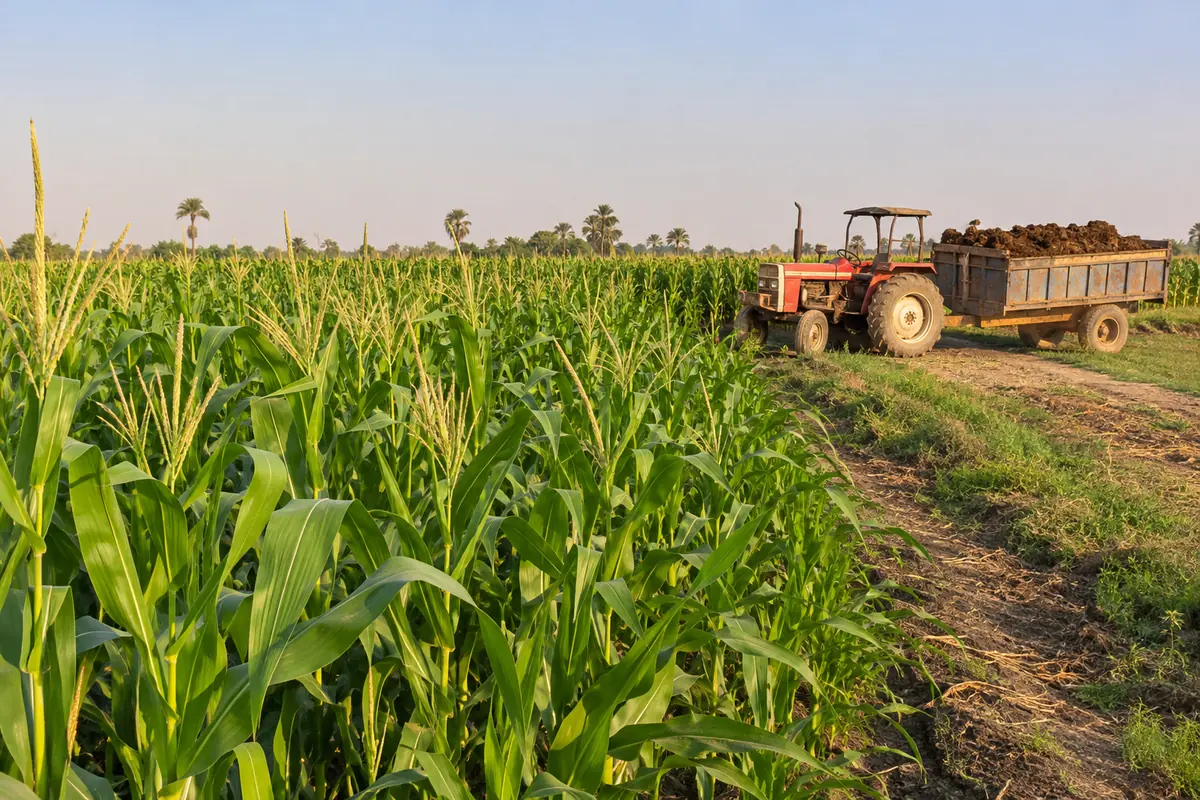
A Ministry of Agriculture bulletin, as reported by the press, quotes 20 to 30 cubic metres of decomposed farmyard manure per feddan for maize in old land, and a maize research head at the Agricultural Research Center, quoted in the press, gives about 30 for calcareous new land under flood irrigation. It is spread before the final ploughing, ahead of planting. Poultry manure is far richer in nitrogen, so it is used in smaller quantities and only when well aged.
Why summer maize responds to manure
Maize is a fast, heavy feeder. In a few months it builds a tall plant and a large ear, and it pulls a lot of nitrogen from the soil. In Egypt it usually follows a winter crop, often wheat or berseem, and it is irrigated through the hottest part of the year. That combination creates three problems that organic matter helps with:
- Water. Soil with more organic matter holds more of each irrigation, which matters in July when evaporation is high.
- Nitrogen supply. Manure releases part of its nitrogen slowly over the season, which smooths the peaks and troughs of a mineral-only program.
- Soil structure. In heavy Delta clay, manure loosens the soil and helps roots and water move. In sandy new land, it holds on to what the sand cannot.
None of this makes manure a substitute for a nitrogen program. We say this up front because the biggest mistake with maize and manure is expecting the manure to do the whole job. Research reviewed below treats manure as a partner to mineral fertilizer, not a replacement.
What Egyptian sources quote
The most-cited figures come from technical bulletins of the Ministry of Agriculture and Land Reclamation, which the daily Al-Dostor reported in its “technical recommendations for maize growers” bulletin, and from a maize research head at the Agricultural Research Center quoted by Al-Mostaqbal Al-Akhdar. The press summaries we read give these figures:
| Land type | Quoted organic manure | Notes |
|---|---|---|
| Old land, especially maize after wheat | 20-30 cubic metres of farmyard manure per feddan | Spread, then plough twice at right angles |
| New calcareous land with flood irrigation | about 30 cubic metres per feddan | Agricultural Research Center maize head (Al-Mostaqbal Al-Akhdar); the same source gives 30-40 for sandy new land |
| Companion phosphate | 200 kg of calcium superphosphate (15.5%) per feddan | Before ploughing or during land preparation |
| Companion potash | 50 kg of potassium sulphate (48%) per feddan | Added at preparation, per the same bulletin |
The same research head gives 30 to 40 cubic metres of farmyard manure for sandy new land, and the sources do not agree on the phosphate rate: the Al-Dostor bulletin says 200 kg of superphosphate per feddan for old land, while the Al-Mostaqbal Al-Akhdar report says 50 kg for old land and 200 kg for new land. Confirm the figure with your agronomist, and keep the spread as a reminder that the range is wide.
Two points to keep in mind. First, these amounts are volumes, not weights. A cubic metre of manure weighs differently depending on moisture and how fine it is, so ask your supplier for the weight per cubic metre of the material you are buying. At Al Omariya we sell by the ton, and the quantity you order is confirmed by weight. Second, the figures are for the whole preparation, so the phosphate and potash lines are part of the same plan, and a soil test should adjust them.
Timing: before the final ploughing
Maize is sown in summer. The Ministry bulletin reported by Al-Dostor says May is the most suitable month, because the climate suits growth and reduces stem borer damage. Agrimisr describes April to June as ideal, with a late summer window from mid-July to the first week of August, and says mid-August is ideal in Toshka and East Oweinat. Check the planting window recommended for your governorate, since the sources we read are a mix of press articles and extension sites rather than a single official table (Agrimisr is one planting-dates reference).
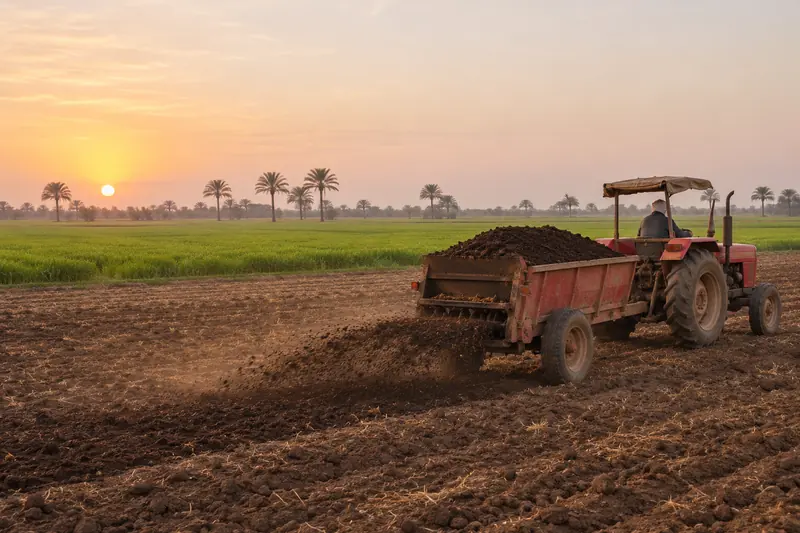
Whatever your sowing date, the manure goes in during land preparation. The Ministry figure says to spread the manure and then plough twice at right angles. That is the key sequence:
- Order and deliver early. Aim for delivery two to three weeks before the final ploughing, so the manure is on site, checked and ready.
- Spread evenly. Uneven spreading is the biggest field problem: stripes of tall green maize next to pale patches. See How to store and spread manure for equipment and calibration.
- Incorporate promptly. Plough soon after spreading so that the nitrogen in the manure does not blow away as ammonia on a hot day.
- Irrigate and let the soil settle before sowing, according to your usual practice.
If the previous crop was wheat, the gap between wheat harvest and maize sowing can be short, which is why many growers arrange the manure delivery while the wheat is still standing. Compare the winter side of this rotation in Preparing Wheat and Field Crops with Organic Manure in Egypt.
Which manure suits maize
You have two basic choices. Livestock manure (cattle, sheep, buffalo) is low in nutrient concentration per ton and cheap, which is why the Ministry figures are expressed in large volumes per feddan. Poultry manure is concentrated, so you use far less of it per feddan. At Al Omariya both are sold by the ton, and sales confirms the final price when you order:
- Local livestock manure: 275 EGP per ton
- Raw livestock manure: 375 EGP per ton
- Broiler poultry litter: 900 EGP per ton
- Fresh belt poultry manure: 750 EGP per ton
- Poultry mix: 750 EGP per ton
- Layer poultry manure: 1,400 EGP per ton
You can browse all options under livestock manure and poultry manure. We do not publish lab results or nutrient percentages for these products on this page. If you need analysis details for a specific product, ask sales before you order.
A word on the prices: a 20-30 cubic metre livestock program is large in volume. The poultry route can look cheaper in transport because you move fewer tons, but the unit price is higher and the burn risk is real. Compare the real delivered cost per feddan, not the price per ton on its own.
Poultry manure on maize: the cautions
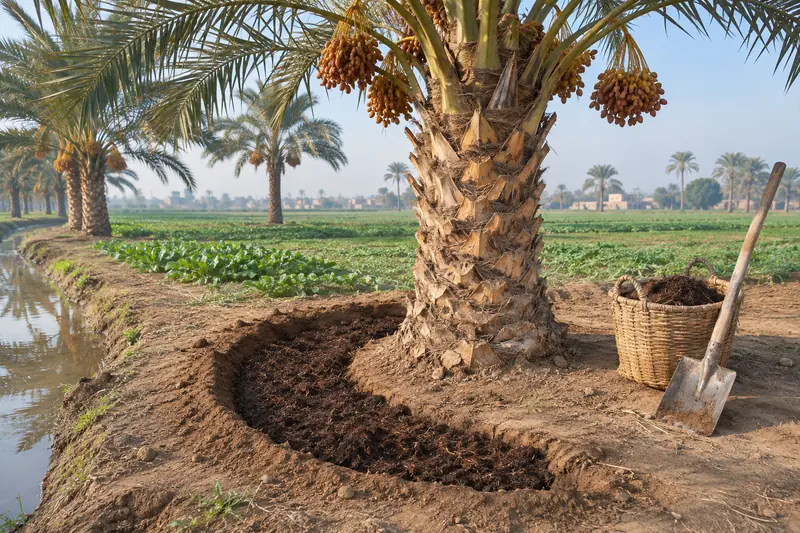
Fresh poultry manure is high in ammonia and salts and can scorch seedlings and roots. The Egyptian sources on poultry manure we gathered for this series say fresh manure burns, that incompletely composted manure can re-ferment in the soil and produce heat, and that recommended ageing varies by source from about two or three months up to six months. Read the full discussion in Does Chicken Manure Burn Plants?.
For maize in particular:
- Apply before planting, not at planting. Maize seedlings are most vulnerable in the first weeks. Spread and incorporate the manure ahead of sowing, with time between the incorporation and the seed going in.
- Use aged material. Fresh manure straight from the house is for ageing or composting, not for the seedbed.
- Do not double-count nitrogen. A strong poultry application already carries nitrogen. If you add the full mineral dose on top, you can over-feed. Over-use of nitrogen burns even with aged manure.
- Keep the quantity modest. Trials in other countries used a wide range, discussed below, but those were not Egyptian soils or manures.
Research abroad shows how variable the answer is. A study in Scientific Reports, Poultry manure improves soil properties and grain mineral composition, maize productivity and economic profitability, found 10 tons per hectare to be the optimal rate in its trial, judged by benefit-to-cost ratio and soil and grain results. A Ghana study on poultry manure and maize recommended 4 tons per hectare on its soil, with no statistical difference from 8. A Nigerian trial on an Ultisol found yields rose with rate up to about 18 tons per hectare and then fell. The spread, from 4 to 18 tons per hectare, is the real message: the best rate depends on the soil and on the nutrient content of the manure. These are tropical and sub-tropical trials with different manures and soils, so do not carry the numbers straight into an Egyptian field. A soil test and a manure analysis are the sensible basis.
How much of the nitrogen does the crop actually get?
Manure nitrogen is not like urea. Part of it is available quickly, and part is locked in organic form and released over months. The Cornell Cooperative Extension fact sheet Nitrogen Credits from Manure gives the example of poultry manure, with a large part of its organic nitrogen released in the year of application and much smaller shares in the following two years. The same fact sheet advises conserving ammonia by incorporating manure immediately after spreading. A Canadian field study, Availability of Nitrogen from Three Manures to Corn in the Field, compared three manures with urea as nitrogen sources for corn and found that nitrogen availability differs between manures: the one with the lowest availability gave lower soil nitrate.
What does this mean for an Egyptian maize grower?
- Manure nitrogen is variable and depends on temperature, moisture and the age of the material. It should not be treated as the same as mineral nitrogen.
- Pre-plant incorporation matters, because poultry nitrogen can be lost if the manure sits on the surface in summer heat.
- You can cut back the mineral nitrogen only if you know what the manure supplies. The wheat guidance we reviewed in this series suggests that a good manure application lets you reduce mineral nitrogen modestly, by about 15 kg of nitrogen per feddan for wheat. We do not have an equivalent figure for maize, so ask your agronomist rather than guessing.
Mineral nitrogen still carries the crop
The Egyptian sources agree that maize needs split nitrogen through the season. Their figures, from press and extension pages rather than an official table, include:
- In old land, about 260 kg of urea or 360 kg of ammonium nitrate per feddan, with the first dose at the first irrigation about three weeks after sowing, with thinning (Agricultural Research Center maize head, via Al-Mostaqbal Al-Akhdar).
- In new land, 360 to 450 kg of ammonium nitrate (33.5%) per feddan through the fertigation system (same source).
- Under drip or pivot irrigation, about 400 kg of ammonium nitrate or 300 kg of urea per feddan, started about 15 days after sowing in one Ministry-sourced report (other sources say about 7 days) and repeated every three to four days in around nine or ten equal doses, ending around the tassel or flowering stage.
- In sandy new land, an Egyptian growing guide on Kenana Online gives eight to ten equal doses through the fertigation tank.
- Potassium, about 50 kg of potassium sulphate per feddan: the Dostor bulletin puts it before ploughing, while a press report puts it three weeks after sowing.
Treat these as the range, not as the answer for your field. The point for this post is that organic manure is the base layer under that program, not a replacement for it. If you are weighing the cost of the two together, see Organic vs Chemical Fertilizer in 2026.
A quick budget example
This is arithmetic, not a recommendation. Suppose a grower in old land follows the lower Ministry figure of 20 cubic metres per feddan and, for illustration only, a cubic metre of the chosen material weighs 0.8 ton. That is 16 tons per feddan. At 275 EGP per ton for local livestock manure, the material is 4,400 EGP per feddan before transport and spreading. At 375 EGP per ton for raw livestock manure, it is 6,000 EGP. The 0.8 figure is an assumption for illustration. Ask for the real weight per cubic metre, because a dry, fine manure and a wet, lumpy one differ a lot.
Now compare with what the plan gives you beyond the nitrogen: structure, water holding and a longer release. Whether that is worth the cost is a decision for each farm, and it is easier to judge with a field test: treat one plot and leave the next plot on the usual program, then compare crop and water use at harvest.
Safety and hygiene
Maize for grain or silage is not eaten raw, so the contact risks are lower than for salad crops, but handling still matters. Fresh poultry manure can carry bacteria such as Salmonella, according to the general sources on chicken manure we reviewed in this series, and workers spreading it should wear gloves and a mask and wash after the job. Keep manure away from irrigation canals and wells to avoid washing nutrients and bacteria into water used by others. Do not store large heaps next to a canal bank.
What to ask your supplier
- How old is the manure, and how was it stored? Aged, dark, crumbly manure with an earthy smell is what you want. See How to Tell Compost Is Mature.
- What is the moisture? Wet manure means you pay for water by the ton and spread less nutrient per truck.
- What is the weight per cubic metre? You need it to convert the Ministry volume figures into tons.
- Is there weed seed or plastic in it? Some manures carry both. A look at a sample from the pile tells you.
- Can I see a photo or sample of the pile you will load from?
- What is the delivery date and unloading plan? Confirm access for the trucks to the field edge.
- Is the price per ton and is the weight verified? Order by weight, not by truck.
For larger orders the checklist in Buying Organic Fertilizer in Bulk from Egypt covers samples and contract terms.
Common mistakes
Spreading fresh poultry manure just before sowing. This is the single most common way to lose a stand.
Uneven spreading. It shows up as patchy growth through the season. Calibrate the spreader or the trailer before the job.
Leaving manure on the surface for days. Heat and wind take nitrogen away. Incorporate promptly.
Counting the manure and the full mineral dose. If you add both at the full level, you may over-feed and invite lodging or burn.
Skipping the soil test. The quoted range of 20 to 40 cubic metres, depending on land type, is a wide one. A test narrows it for your field.
Ignoring salinity. The Egyptian sources on sandy and coastal land warn that organic fertilizers can be high in salts. If your water or soil is already salty, check the manure before applying a large volume.
Forgetting phosphate and potash. The Ministry bulletin pairs the manure with superphosphate and potassium sulphate. Leaving them out changes the plan.
A simple calendar
- Four to six weeks before sowing: soil test, decide the quantity, order the manure.
- Two to three weeks before the final ploughing: delivery, inspection, check of weight and moisture.
- At land preparation: spread, add phosphate and potash, plough twice at right angles.
- At sowing: irrigate according to your normal practice.
- About three weeks after sowing: first nitrogen dose and potash, per the sources above.
- Through the season: split nitrogen as your agronomist directs.
- At harvest: record yield, moisture and any patchy areas, and compare with the previous year.
Keep a note on the quantity, the supplier and the date. Over two or three seasons it becomes the most useful data you own.
Order manure for maize
When you know your quantity, choose the product, tons and governorate on the order page. It opens a WhatsApp message with a reference number, and the sales team confirms price, availability and delivery date. We deliver to all Egyptian governorates and have worked with organic fertilizer since 1984. You can browse the shop first, or contact us on WhatsApp at 01012205022 and ask which material suits your soil and your sowing date.
FAQ
How much organic manure does maize need per feddan?
A Ministry of Agriculture bulletin, as reported by the press, quotes 20-30 cubic metres of decomposed farmyard manure per feddan in old land, and an Agricultural Research Center maize head gives about 30 in calcareous new land under flood irrigation and 30-40 in sandy new land. Convert volume to tons using the real weight of the material, and adjust with a soil test.
When should I spread manure before planting maize?
During land preparation, before the final ploughing. The quoted practice is to spread, then plough twice at right angles. Deliver early, and incorporate promptly after spreading.
Can I use poultry manure on maize?
Yes, with care. It is much richer in nitrogen, so use less of it, use aged material, apply before planting and not at sowing, and do not add the full mineral nitrogen dose on top without advice.
Does manure replace urea or ammonium nitrate for maize?
Not on its own. The Egyptian sources still quote split mineral nitrogen through the season. Manure is the base layer that improves water holding and structure and releases some nitrogen over time.